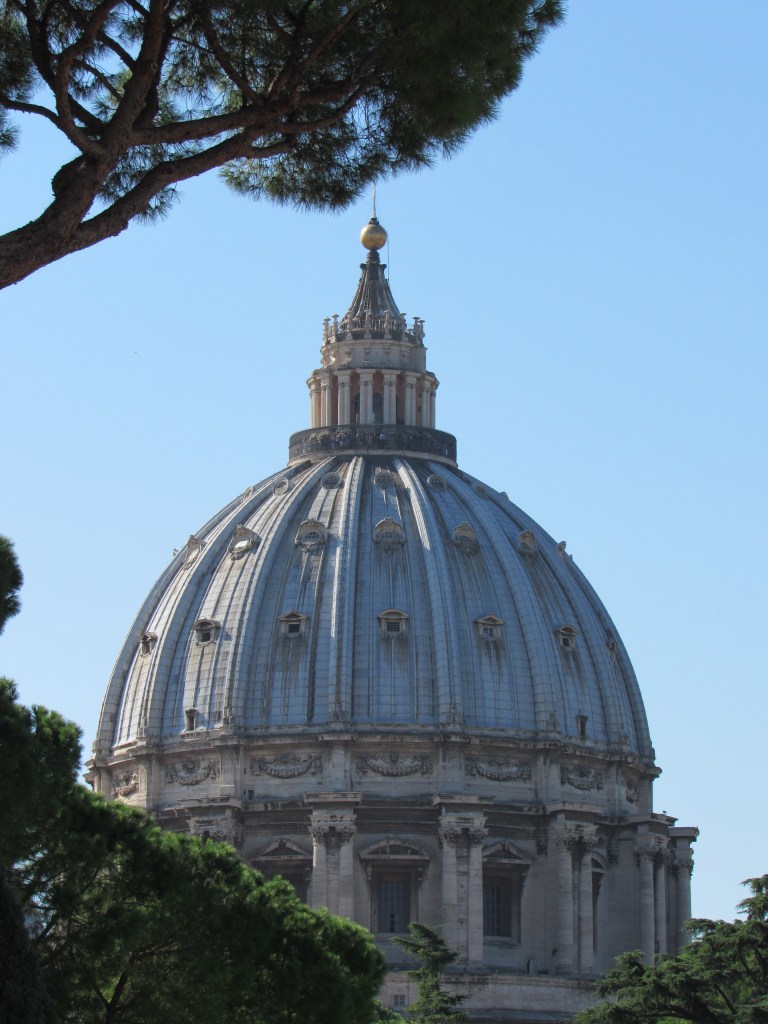
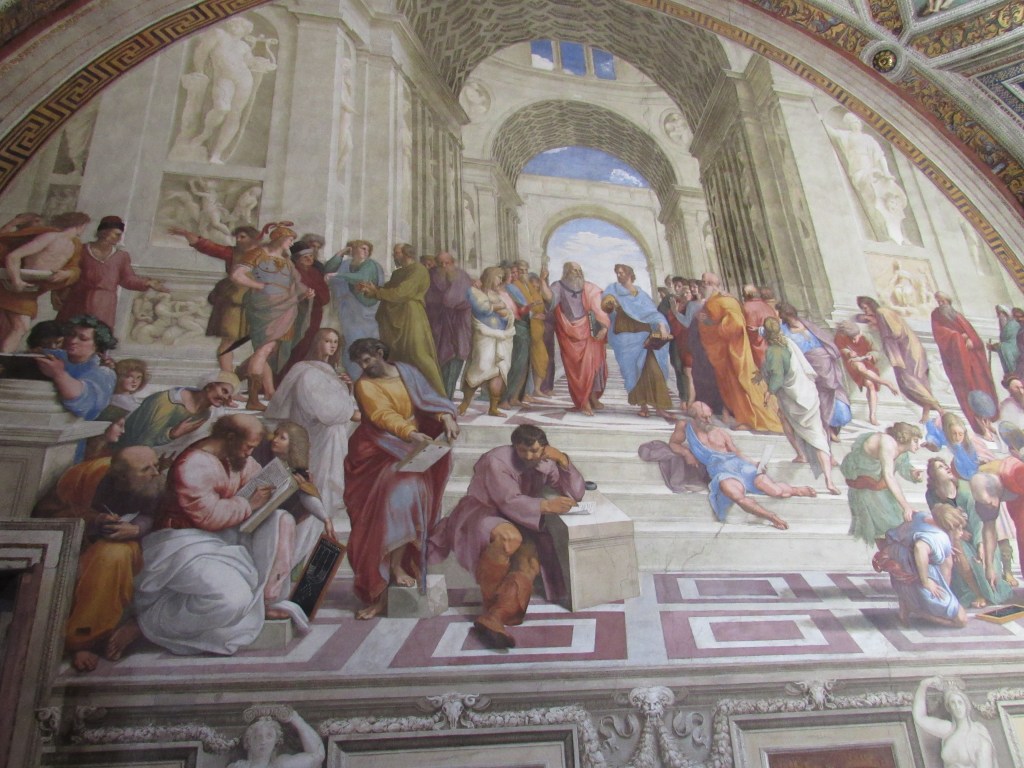
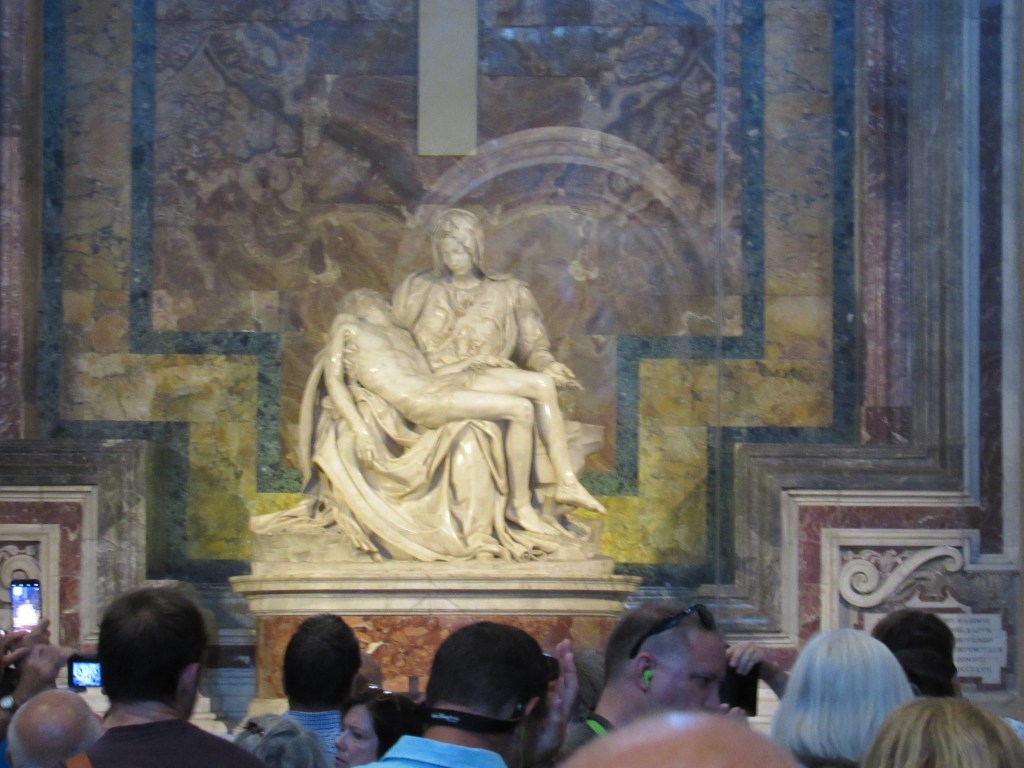
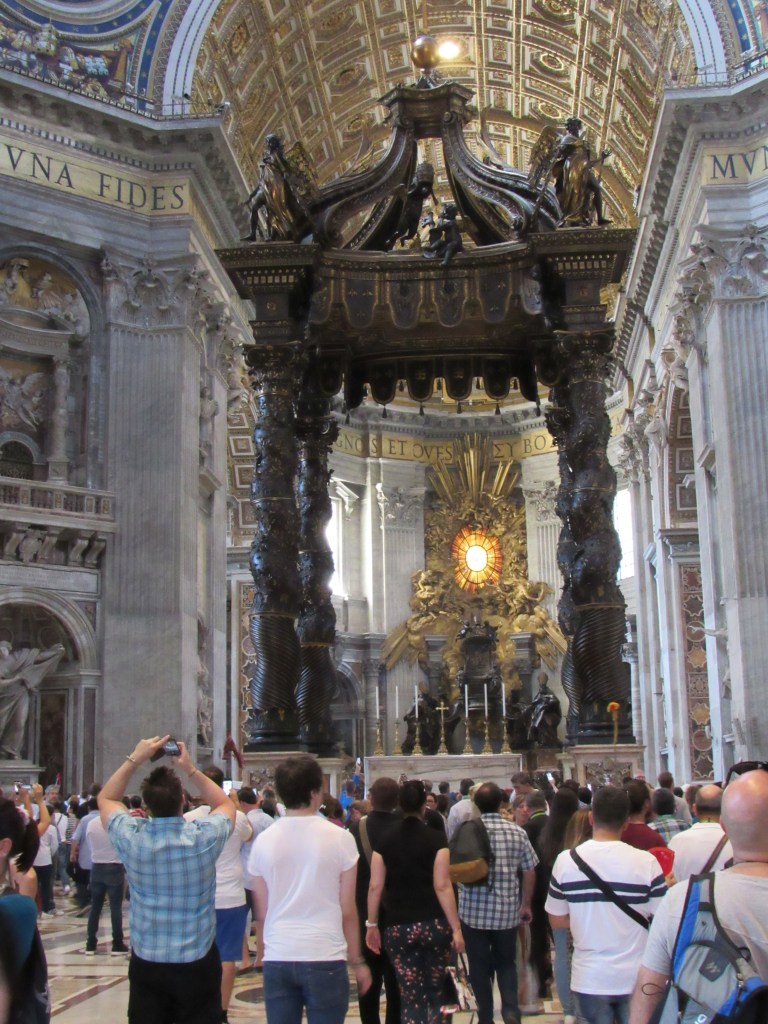
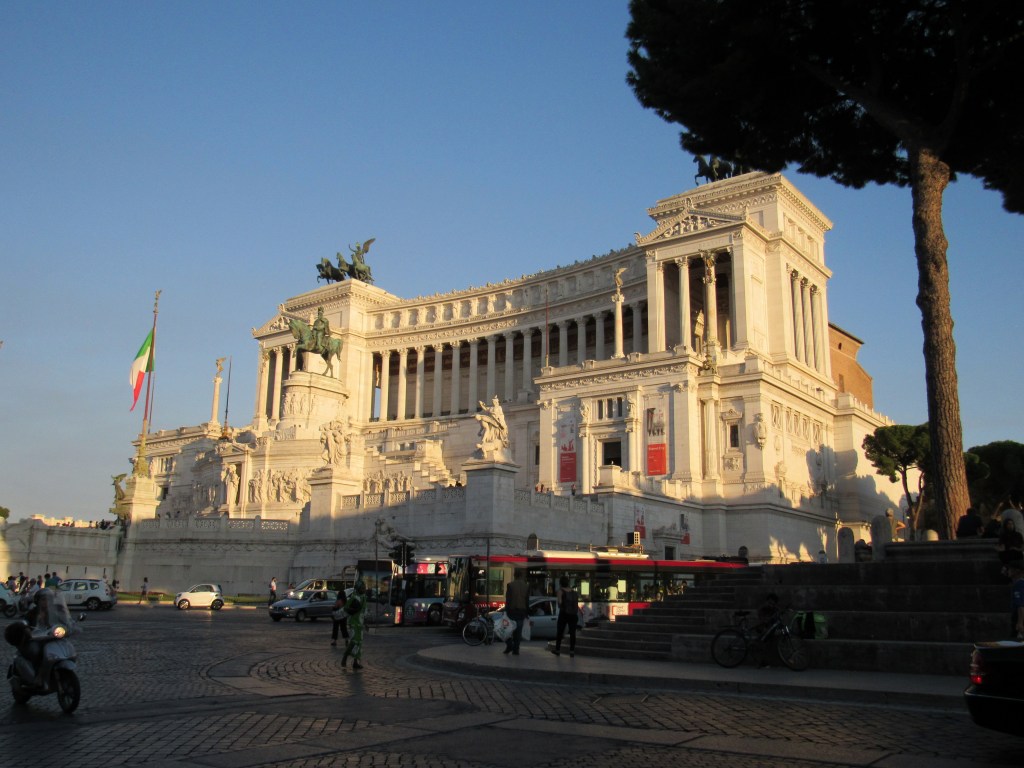
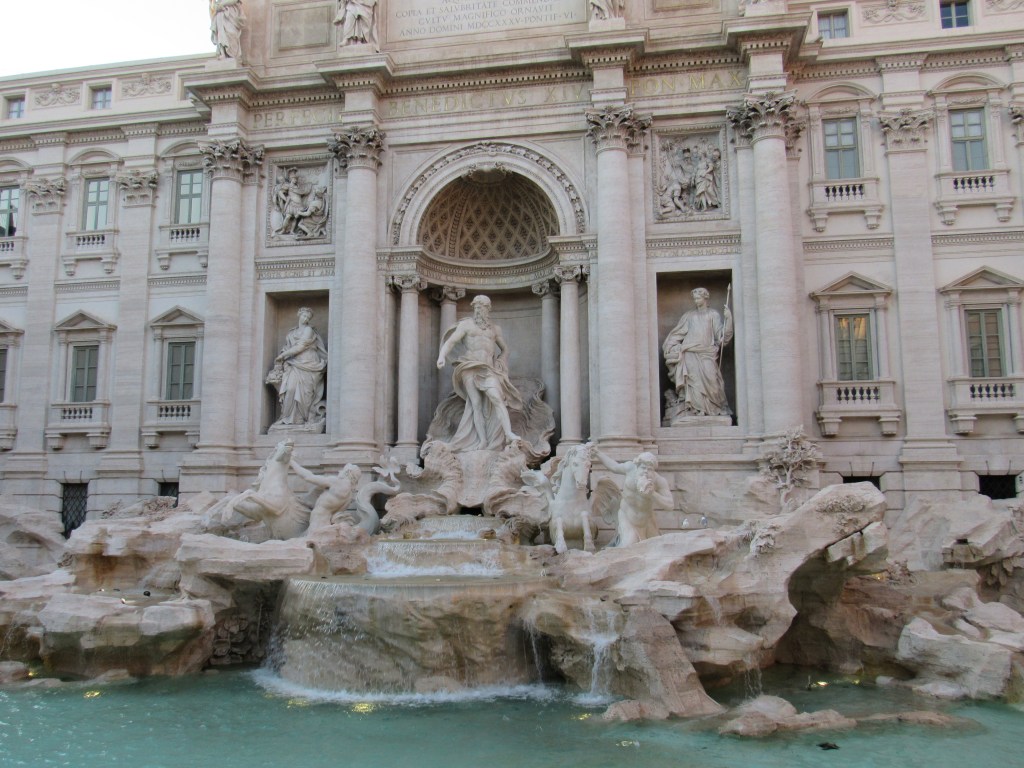
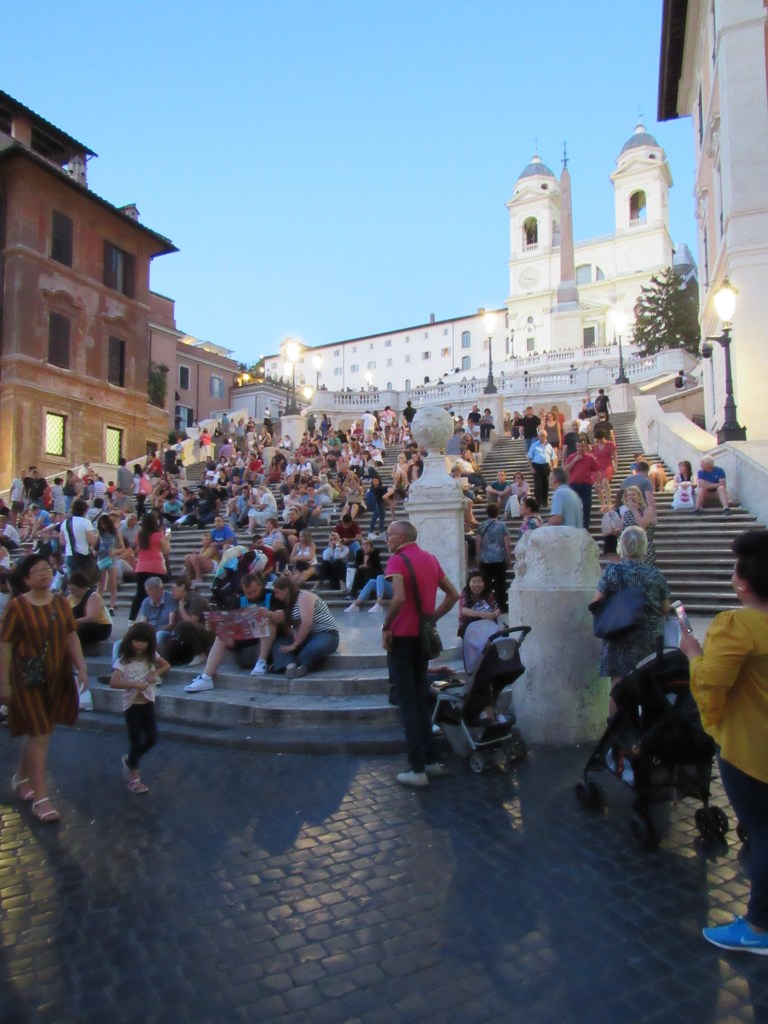
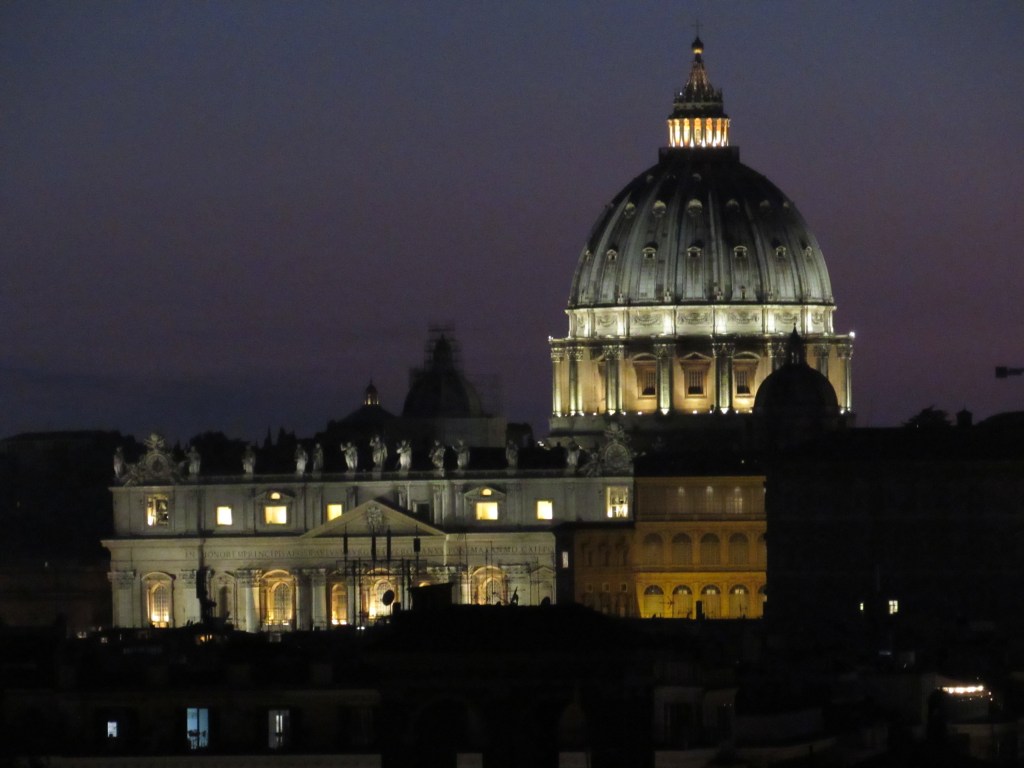
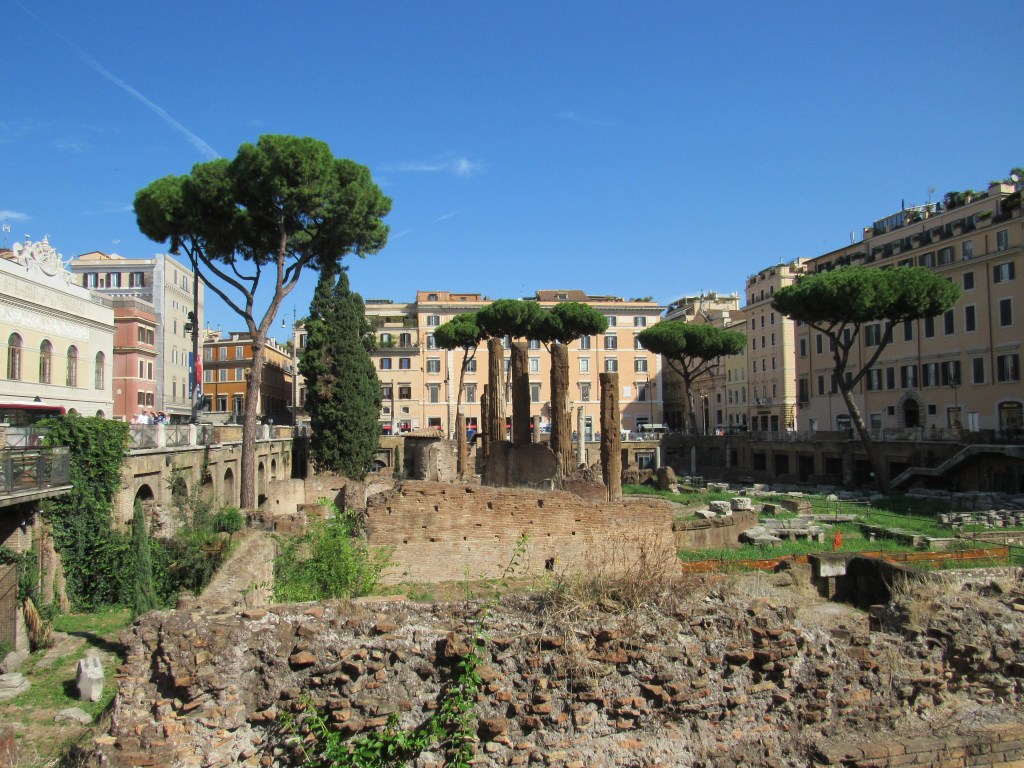
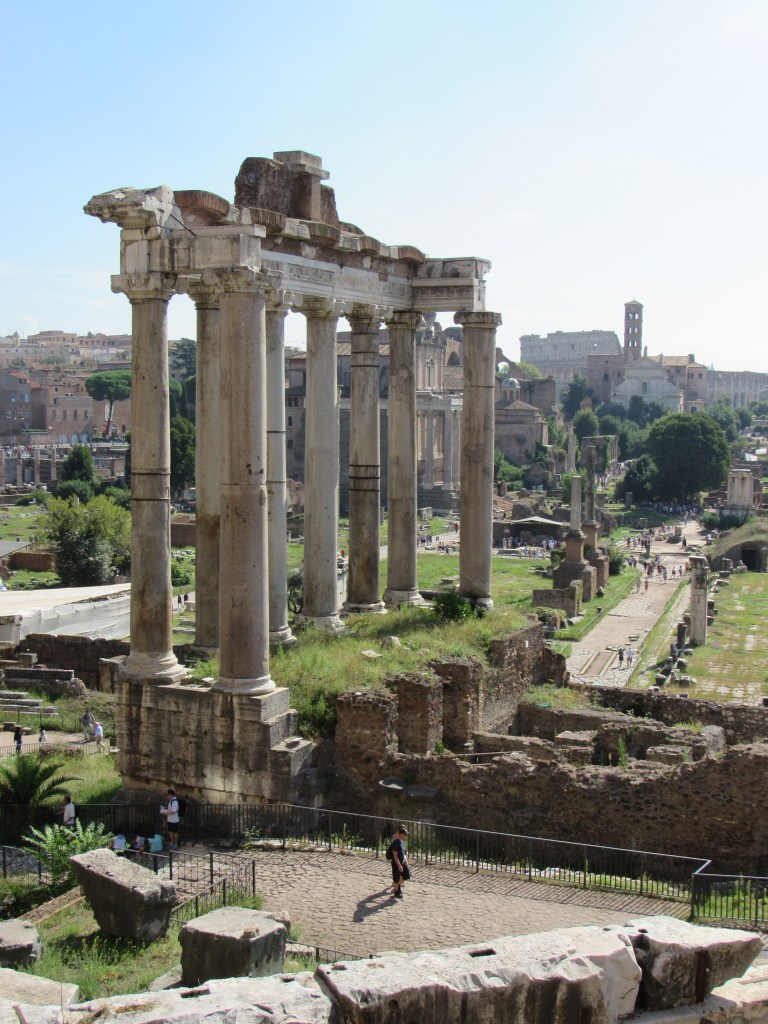
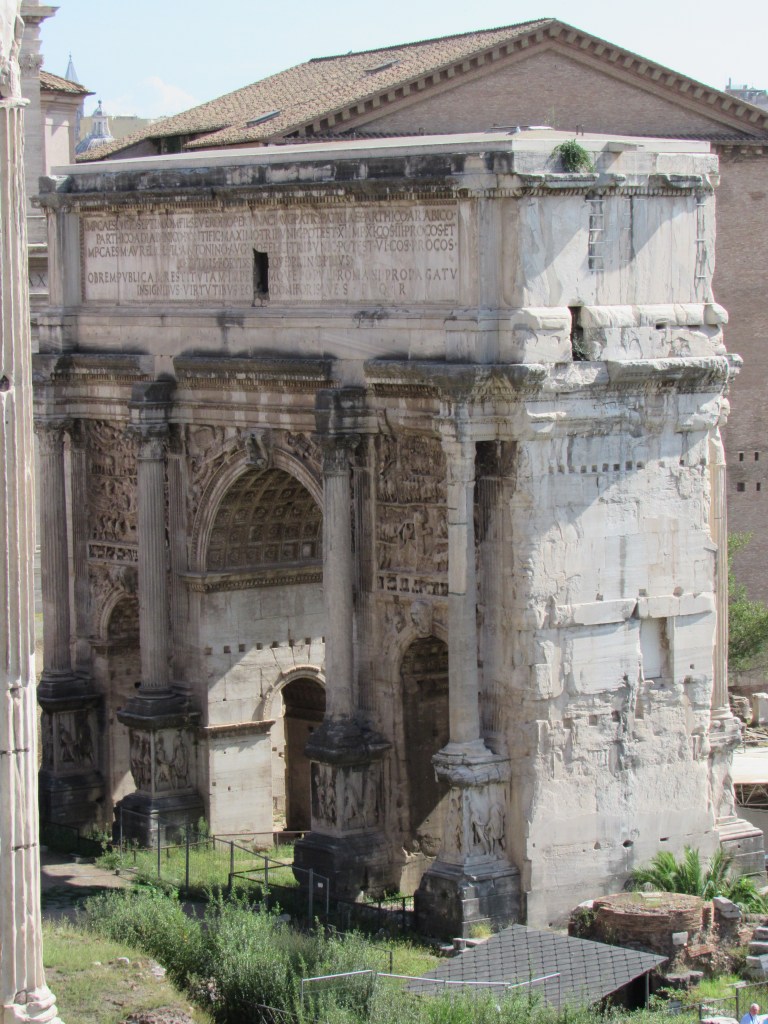
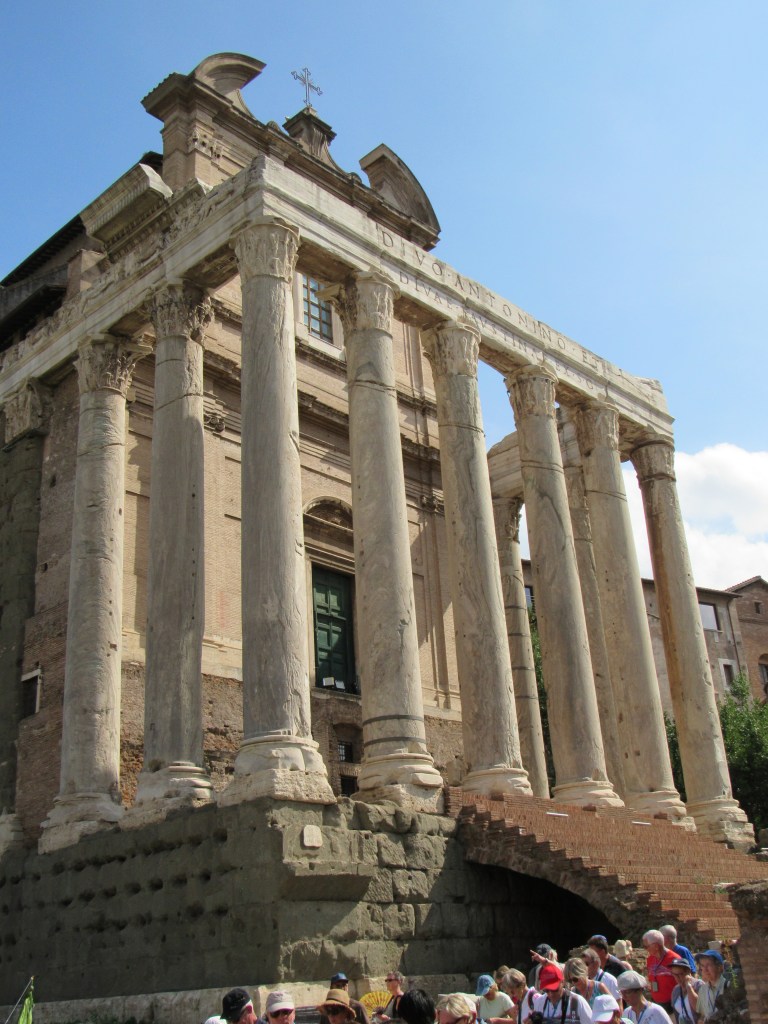
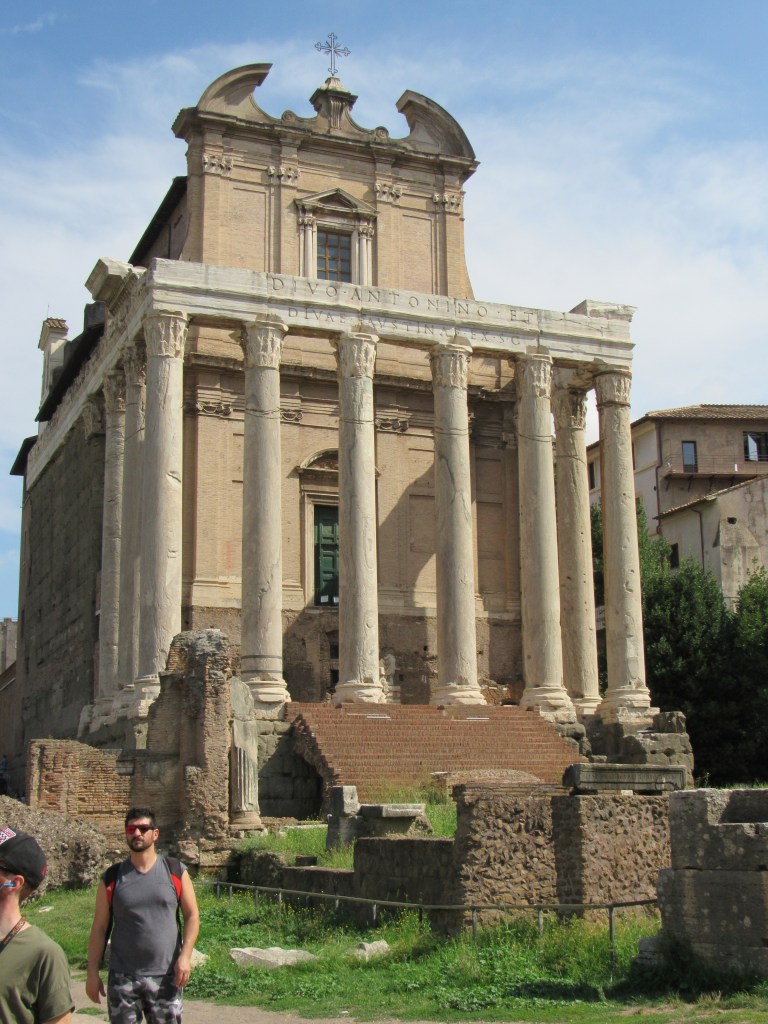
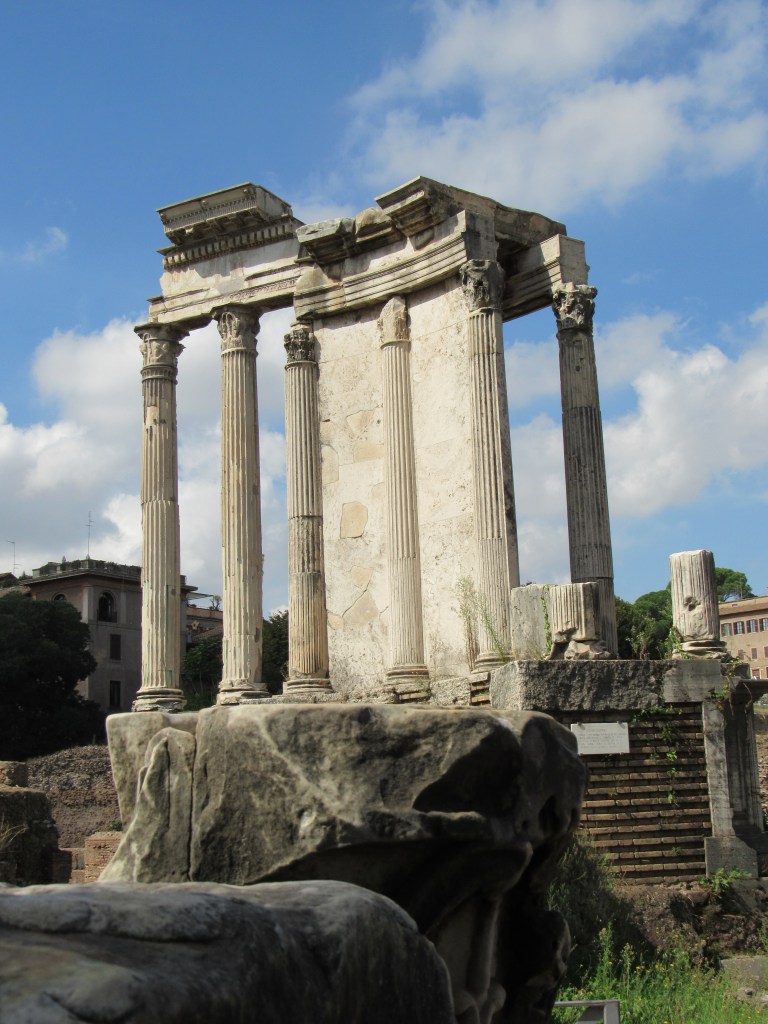
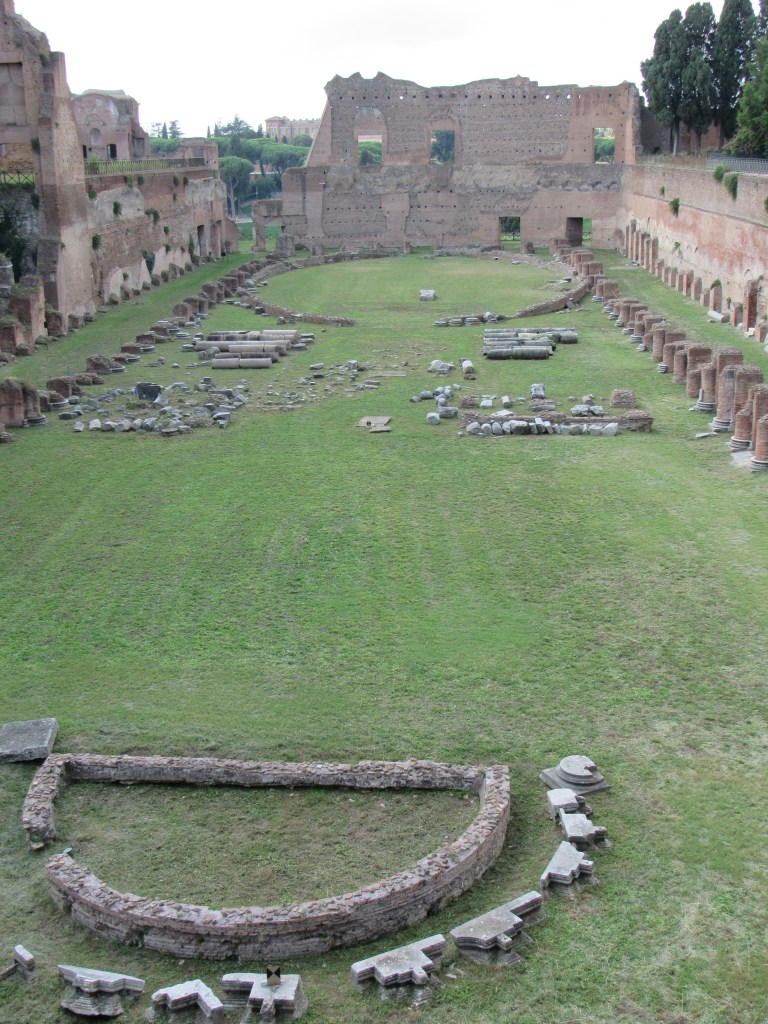
The Basilica Papale di San Pietro in Vaticano (St. Peter’s Basilica)Sculpture in the Vatican Museums (Musei Vaticani)Galleria delle carte geografiche (Gallery of Maps, Vatican)The Scuola di Atene (the School of Athens), a fresco by Raphael – in the Apostolic Palace in the VaticanPieta (The Pity) by Michelangelo (in St. Peter’s Basilica)Interior, St. Peter’s BasilicaMonumento Nazionale a Vittorio Emanuele II (Victor Emmanuel II National Monument), also referred to as the Altare della Patria (Altar of the Fatherland) – national monument in honor of Victor Emmanuel II, the first king of a unified ItalyFontana di Trevi (Trevi Fountain)Scalinata di Trinita dei Monti (the Spanish Steps)The dome of St. Peter’s Basilica, late eveningLargo di Torre Argentina – ruins of four ancient temples – Rome. Home to a feral cat colony. Pompey’s Theater was off to the left – the theater was where the Senate was meeting when Caesar was assassinated, so the assumption is that he was killed somewhere very close by.Rome is an interesting mix of ancient, medieval, and modernThe ancient forum, looking towards the Coliseum; the columns are the remains of the Temple of SaturnWider angle view of the Forum, still looking east. To the left of the Temple of Saturn you can see the Arch of Septimius Severus. The columns to the left of the arch are the remains of the Altar of Saturn.The Arch of Septimius SeverusTrajan’s Markets (lower) and medieval buildings above that. Modern buildings at the extreme right in the photograph.View from the north side of the forum, looking southeast at the Palatine Hill.On the forum looking west; the Arch of Septimius Severus on the right, the Temple of Saturn on the left.The Temple of Antoninus and Faustina; at some point, the church of S. Lorenzo in Miranda was incorporated into this building (the front of the church was on the other side, away from the forum)Another view of the Temple of Antoninus and Faustina – in this view, you can see the cross at the top, added by the church when the building was used as the church of S. Lorenzo in MirandaThe Temple of Castor and PolluxThe Temple of Castor and Pollux, from the top of the Palatine hillThe Temple of VestaLooking roughly north, the Basilica of Maxentius (later renamed for Constantine). You are seeing the north side of the building, which originally measured 100×65 meters. It was apparently used as the administrative seat of the city of Rome.The Palatine hill – used as the home of the Emperor. This field was used as a place to exercise horses (a small circus, in effect) and at times as a garden.The Circus Maximus, from the south end of the Palatine hill. The Emperors could watch the events at the circus without leaving the palace. Now surrounded by busy streets.Some of the remaining structure of the Emperor’s palace on the Palatine hill.The Temple of Romulus; the Basilica of Santi Cosma et Domiano (the Basilica of Saints Cosmas and Damian)The Coliseum from the Palatine Hill











 Travels and Doings